AI Camera: Raspberry Pi Image-to-Video System
AI Camera: A Raspberry Pi Image-to-Video Generation System
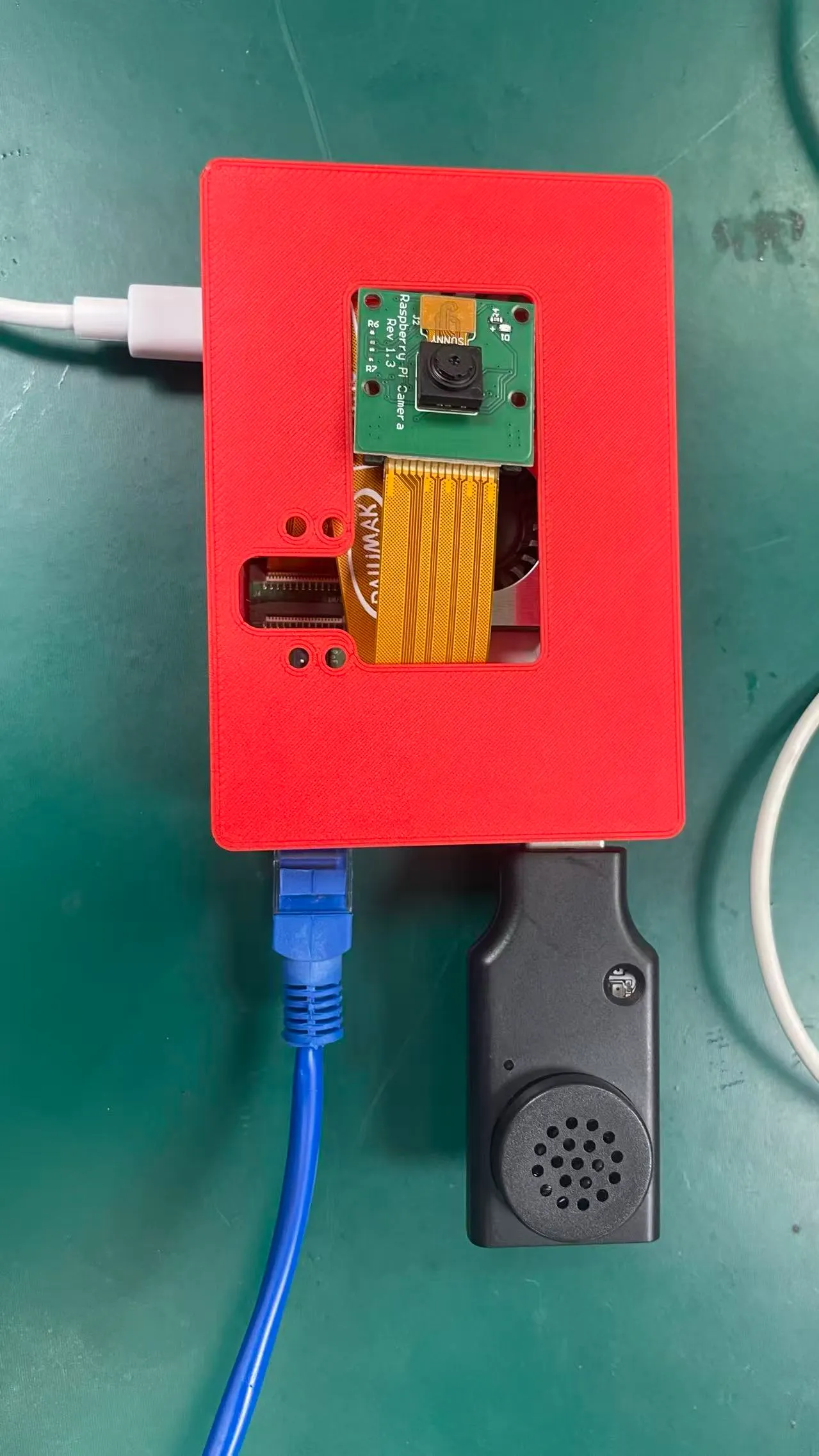
A Raspberry Pi in a red 3D-printed shell: take a photo, or describe a dream, and it turns that into a short film with real camera language.
- Role
- Course Project · Innovative Experiments in Electronic Science III
- Period
- Sep. 2025 – Jun. 2026
- Institution
- SUSTech Supervised by Dr. Junmin Jiang
Why this matters
Generative models can already turn a still into video, but that happens in a browser tab — the camera itself still only records. This project turns the camera into a creative terminal: it has to understand why you took the shot, turn the story and mood you add into shot language, and produce a finished clip. The hard part was never any single API. It was chaining a camera, a microphone, a language model and a video service — each of which fails in its own way — into one flow an ordinary person can finish.
What I did
- Built live preview and capture on Picamera2, with a seven-page PySide6 desktop UI: home, capture, story, prompt, video, history and settings.
- Designed three creative modes: shoot reality (photo + story), recover a dream (text or voice), and black-box finale (reconstruction from narrative fragments).
- Used OpenAI Chat Completions as an "AI director" to turn photo and story into a cinematic treatment, then compressed and translated it into short English Runway prompts via a dedicated optimizer.
- Added real-time speech-to-text over the OpenAI Realtime WebSocket, with a volume gate, auto-submit on silence, a maximum segment length and retained recordings — fixing unstable transcript segmentation.
- Drove the Runway API for generation across Gen-4 / Gen-4.5 / Veo / Seedance model configurations, running jobs on a background thread so a multi-minute wait never froze the UI.
- Unified photos, text, audio, prompts and videos into session directories (metadata.json plus photos/story/prompts/videos/audio) so every piece stays traceable.
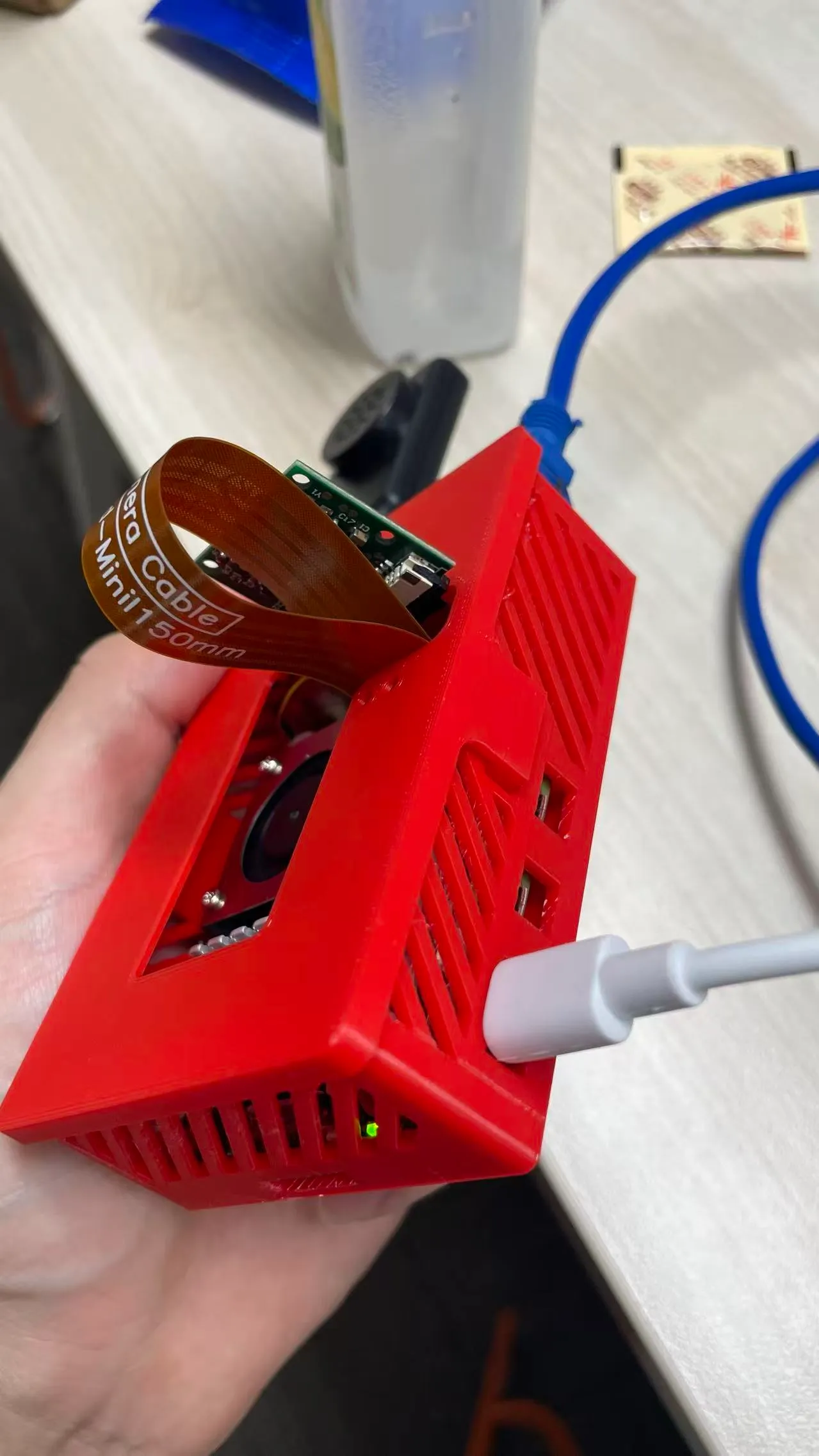
- Modelled and 3D-printed a three-part enclosure: a front window for the camera module, side cutouts for power and Ethernet, designed around ribbon-cable bend radius and serviceability.
Course project for Innovative Experiments in Electronic Science III. Below: the assembled device, and a screen recording of the interface in use.
Outcome
- All three creative modes verified end to end, with test work saved under the sessions directory.
- Representative runs: 3 photos plus a story produced 3 video versions; a spoken dream produced a storm-liner short; an escape-room narrative produced a sci-fi finale (Gen-4.5, 5–8 s, 1280×720).
- The enclosure was printed and assembled, taking the project from a program that runs to a device that can be shown.
Technologies
- Raspberry Pi
- Picamera2
- PySide6 / Qt
- OpenAI API
- Runway API
- Realtime Speech over WebSocket
- Multithreading
- 3D Modelling & Printing